

As an Austin homeowner, I've followed the legislative collusion between corporate bulb manufacturers like Philips and GE, the United States Congress and the fringe environmental group NRDC; otherwise known as the National Resource Defense Council. How could these disparate groups agree to support the increased efficiency standards for 100 watt incandescent bulbs?
First, the profit margins per bulb on incandescent bulbs is very low. By supporting arbitrary efficiency standards that reliable, affordable incandescent bulbs can't meet, GE and Philips will profit from selling pricier LED bulbs and American consumers will pay more for light bulbs. Think of it as a light bulb tax.
Second, the NRDC's misguided focus on light bulb wattage, rather than the number of kilowatt hours a homeowner consumes is pointless. Five years ago I began purchasing shaded floor lamps with multiple sockets. As a consumer, I'll wait until a warm, 100-watt LED bulb is perfected, buy those and install them in my light sockets. You hand-wringing carbon-cassandra's will not tell me how many watts of lighting I may enjoy and consume in my home. Will 30 planned powerplants not have to be built to meet America's future energy needs? I doubt it.
Third, I love the verbal contortions environmentalist's twist themselves into. For example, the incandescent light bulbs have been banned in Europe since 2009 and this is offered as some sort of example that America should follow. (see "Europe's Ban on Old-Style Bulbs Begins", by James Kanter, August 31, 2009 The New York Times) If I wanted to follow Europe's example, I'd move there. Yet, this same American efficiency legislation for incandescent bulb enrages environmentalists who scoff at the word "ban". If I visit Lowe's and want to buy a 100 watt incandescent bulb, and they aren't manufactured anymore because of legislation, then it is effectively banned.
Fourth, politicians and environmental blogs have hailed the new efficiency legislation for incandescent bulbs as a job creation bonanza. It certainly does create jobs, if you live in China.
Now back to the bulb. I searched the Internet in vain for news about where the Philips AmbientLED, a dimmable, A19 bulb that some environmentalist's tout as a worthy, yet pricey successor to Edison's warm, reliable and affordable incandescent light bulb was made.
Since I couldn't find this information, I visited my local Home Depot and photographed the front and back of the Philips AmbientLED's packaging. And there it was. In the smallest font, on the back of the package, in the lower right-hand corner, this Dutch-owned, AmbientLED A19 bulb is made in China.
One last note. If these AmbientLED bulbs save consumers so much money on their utility/electricity bills, why isn't that cited on any of Amazon's customer reviews for this $40 60-watt bulb?


 Here is the body of that text:
.jpg)
 Paul read his letter to the Council:
 Mayor Lee Leffingwell: Thank you, Mr. Norris. Councilmember Laura Morrison. Might be a question for you, Mr. Norris.
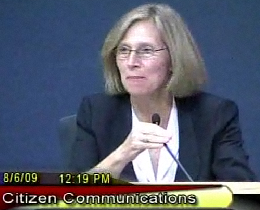 Council Member Laura Morrison: Actually if we have an attorney that --

 Some 22,000 buildings would have been affected by Mayor Bloomberg's statist mandatory audit initiative to raise the cost of operating buildings in New York City. According to the New York Times

+Ordinance.jpg) Our disappointment began when my wife and I tried to redeem a $250 window replacement rebate that Austin Energy was offering. A rebate works like this, the homeowner spends his or her capital on a resource (windows) and the city-run monopoly, (Austin Energy) writes the homeowner a check after one of their staff visits the property to verify that new energy efficient windows were installed. My wife and I faxed the required Austin Energy rebate paperwork and then we waited. And we waited. We never heard from any Austin Energy employee to inform us that they had received the paperwork and were processing it. My wife and I decided to submit the paperwork again, and once again we heard nothing.
Our disappointment began when my wife and I tried to redeem a $250 window replacement rebate that Austin Energy was offering. A rebate works like this, the homeowner spends his or her capital on a resource (windows) and the city-run monopoly, (Austin Energy) writes the homeowner a check after one of their staff visits the property to verify that new energy efficient windows were installed. My wife and I faxed the required Austin Energy rebate paperwork and then we waited. And we waited. We never heard from any Austin Energy employee to inform us that they had received the paperwork and were processing it. My wife and I decided to submit the paperwork again, and once again we heard nothing.

